Skip to main content


Chips, fries or whole potatoes come in all shapes and sizes, presenting a unique set of challenges. How do you make sure every piece meets the highest quality standards? At Optimum Sorting we provide a clear solution: laser sorting.
Our advanced technology not only detects foreign materials in your potato products but also identifies subtle defects such as wet centers in chips or soft rot in potatoes. Laser sorting delivers unmatched precision, ensuring only the finest products reach the consumer. In this article you will discover how our innovative approach transforms the processing of a wide range of products.
Laser sorting explained: the smart way to achieve peak performance
Optimum Sorting has years of experience in sorting potato products using advanced camera technology. These high-performance cameras accurately detect variations in color and shape, making them ideal for analyzing a product’s exterior, including length, shape and color. Yet some critical defects remain invisible to the camera’s eye…
Laser sorting delivers an innovative solution. Unlike cameras, lasers inspect the interior of your potatoes, revealing a whole new spectrum of defects. This technology lets you go deeper and sort with unmatched precision. Too hard or too soft, too wet or too dry? Laser sorting identifies these differences with exceptional accuracy and makes the right decisions. Read on to discover how this technology sets a new standard for product quality and food safety.

Detecting foreign material in fries
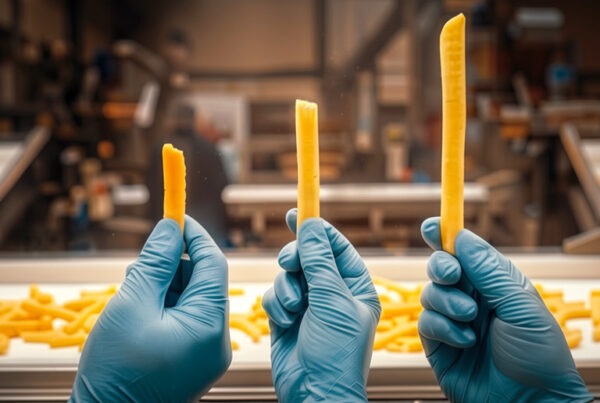
Laser technology offers a distinct advantage in sorting fries. Unlike camera systems, which only inspect the surface, lasers analyze the internal structure of each fry. This is crucial for detecting foreign material that can slip into the product stream during processing. By analyzing laser beam reflections, we accurately determine an object’s density, enabling us to identify:
- Pieces of plastic, glass or metal (ferrous and non-ferrous) among the fries.
- Stones or rubber pieces that are hard to spot visually.
- Organic debris such as leaves or twigs.
Lasers are essential for identifying what are commonly referred to as sugar ends in French fries. These dark tips form after frying due to elevated sugar levels in the potato. They are hard to spot in raw fries, particularly at high sorting speeds. Near-infrared (NIR) lasers however allow sorting machines to penetrate the surface and detect subtle chemical variations, ensuring sugar ends are identified early and removed automatically.
Detecting wet centers in chips
When sorting chips, especially kettle chips, laser technology offers a unique advantage by looking beyond the surface. Using advanced density and moisture detection, lasers identify defects that traditional methods often miss, such as oil spots or wet centers caused by incomplete frying. These imperfections affect texture and shelf life. Laser sorting also distinguishes subtle differences between undercooked and burnt chips, delivering a noticeable boost in overall product quality.
Identifying soft rot and solanine in potatoes
One of the most advanced applications of laser sorting is detecting soft rot in potatoes. Soft rot (also called water rot) is an internal decay that turns the potato’s flesh soft, moist and often slimy. It typically develops due to bacterial infections combined with excess moisture during growing or storage. The challenge? After washing, soft rot looks almost identical to a healthy potato, making traditional camera systems fall short.
Laser sorting delivers a highly effective solution. It analyzes the potato’s internal structure to detect subtle variations in density and composition. This ensures affected potatoes are removed before they enter further processing. For producers, this means fewer rejected batches, reduced waste and consistently higher product quality, even in wet years when the problem is more frequent.
In addition to soft rot, lasers are highly effective for detecting solanine. Solanine is a natural toxin found in potatoes and other tubers, especially when they are exposed to light or damaged. Using specialized fluorescent lasers, sorting machines identify this compound by analyzing the unique light reflection it produces. This enables contaminated or unhealthy tubers to be removed early in the process, before any visible defects appear.
What makes Optimum Sorting’s laser technology truly unique?
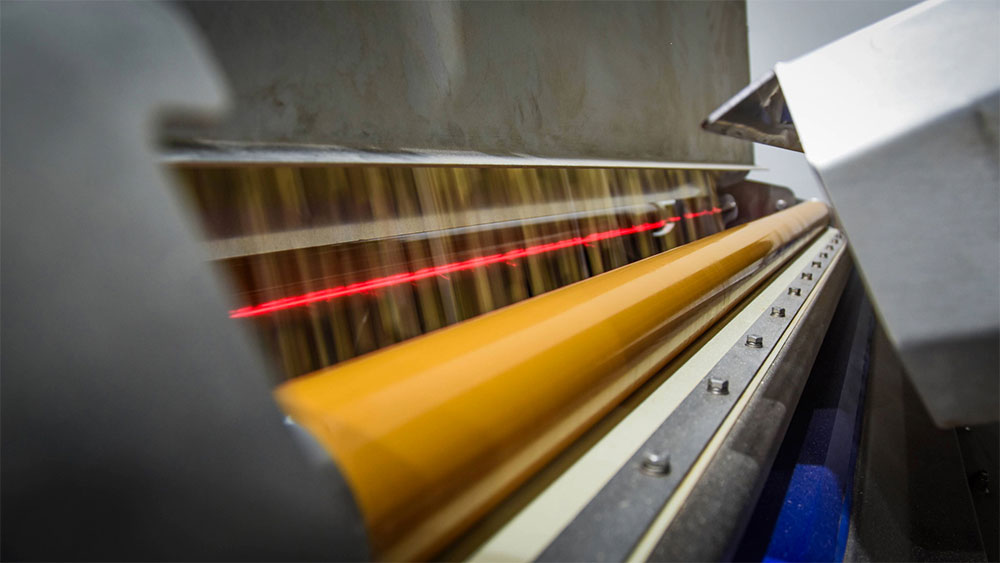
Optimum Sorting’s laser technology stands out for its exceptional precision and versatility in inspecting and sorting potato products. With the Ventus free-fall sorter or the Novus belt sorter (equipped with an optional laser box), even the smallest defects in potatoes and fries can be detected with ease.
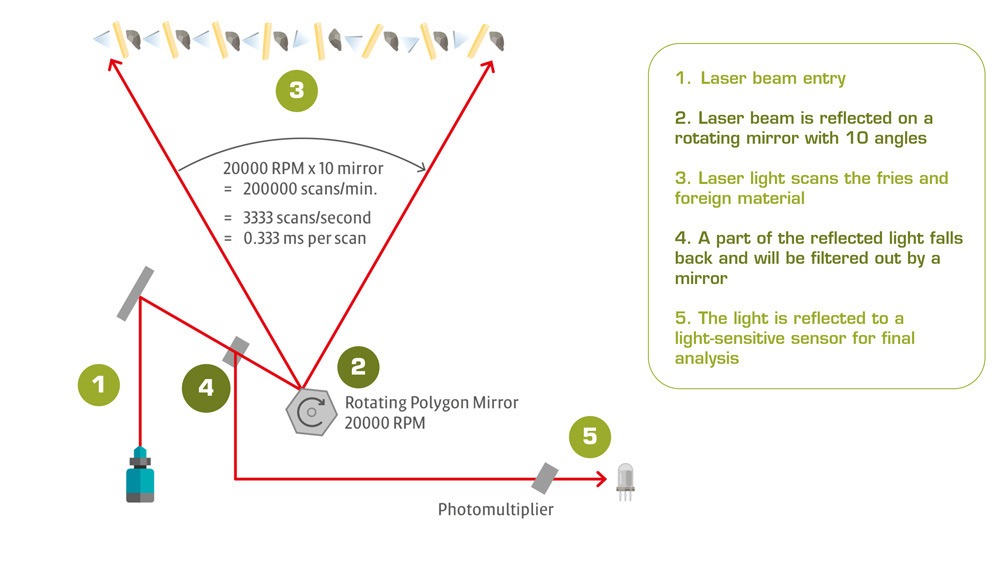
With an optical resolution of just 0.3 mm, our lasers deliver the highest precision on the market—up to four times sharper than the standard 1.3 mm offered by other suppliers. Each laser performs up to 3,333 scans per second, ensuring faster and more accurate analysis of every product. What’s more, each laser operates at a dedicated wavelength, allowing the system to sort with exceptional accuracy based on color, shape, structure, and internal properties. This means defects such as soft rot, wet centers, burnt or undercooked pieces, and foreign materials like stones or wood are detected and removed with ease.
In short, Optimum Sorting’s laser technology delivers an unmatched combination of speed, depth and accuracy, perfectly tailored to the complex challenges of sorting your potato products.
Interested in a free demo?
Get in touch with the sales team of Optimum Sorting and have your chips, French fries and potatoes tested at one of our demo centers around the globe.
Experience firsthand the benefits our machines can bring to your business!