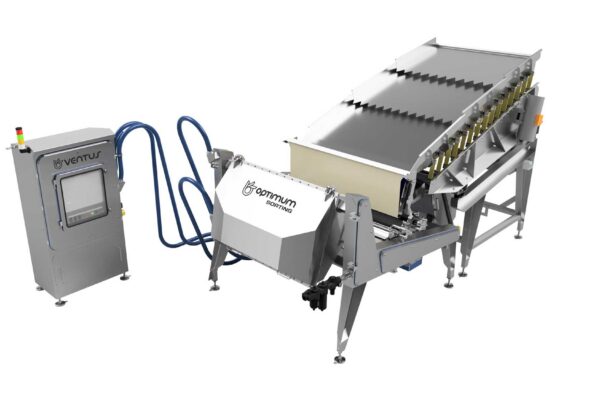
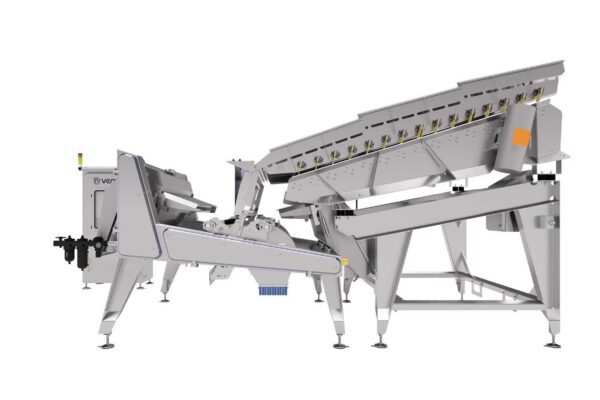
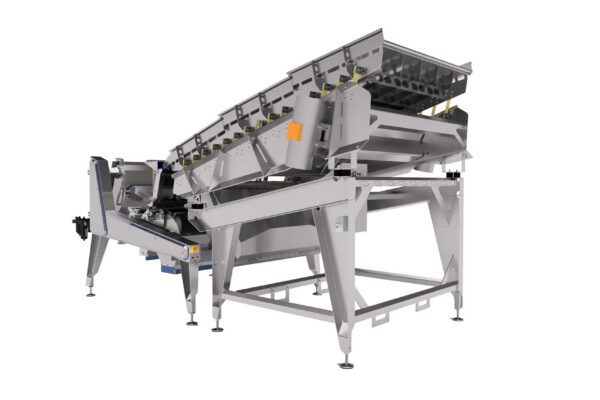
The Ventus can be equipped with up to 16 lasers (and 32 laser detectors). Thanks to the combination of different lasers with specific wavelengths, the Ventus is able to sort extremely accurately on the basis of color, shape, structure and biological characteristics. A brown shell fragment in between brown hazelnuts? Structure sorting extracts it without problems. Fluorescence lasers detect the chlorophyll content or the presence of harmful substances such as aflatoxin in nuts and dried fruits. SWIR (Short Wave Infrared) lasers see the difference between aqueous and nonaqueous products, ideal for finding foreign objects between vegetables and fruit.
By working with different specific wavelengths, you always have the full power of the light source in question available at the optimum wavelength. In the case of multi- or hyperspectral systems based on white (halogen or LED) light, on the other hand, the entire spectrum – and therefore also the power – is divided, so that you have less useful information. Because the Ventus uses lasers with a higher output, the contrast between good and bad products is also much clearer, resulting in optimal defect detection and excellent good-to-bad ratio.
 Skip to main content